
Inventory shrink and internal theft
Product disappears in staging and at the dock, not in the racking. Continuous recording of pick, pack and ship zones with face-height coverage at employee doors ends the guesswork.
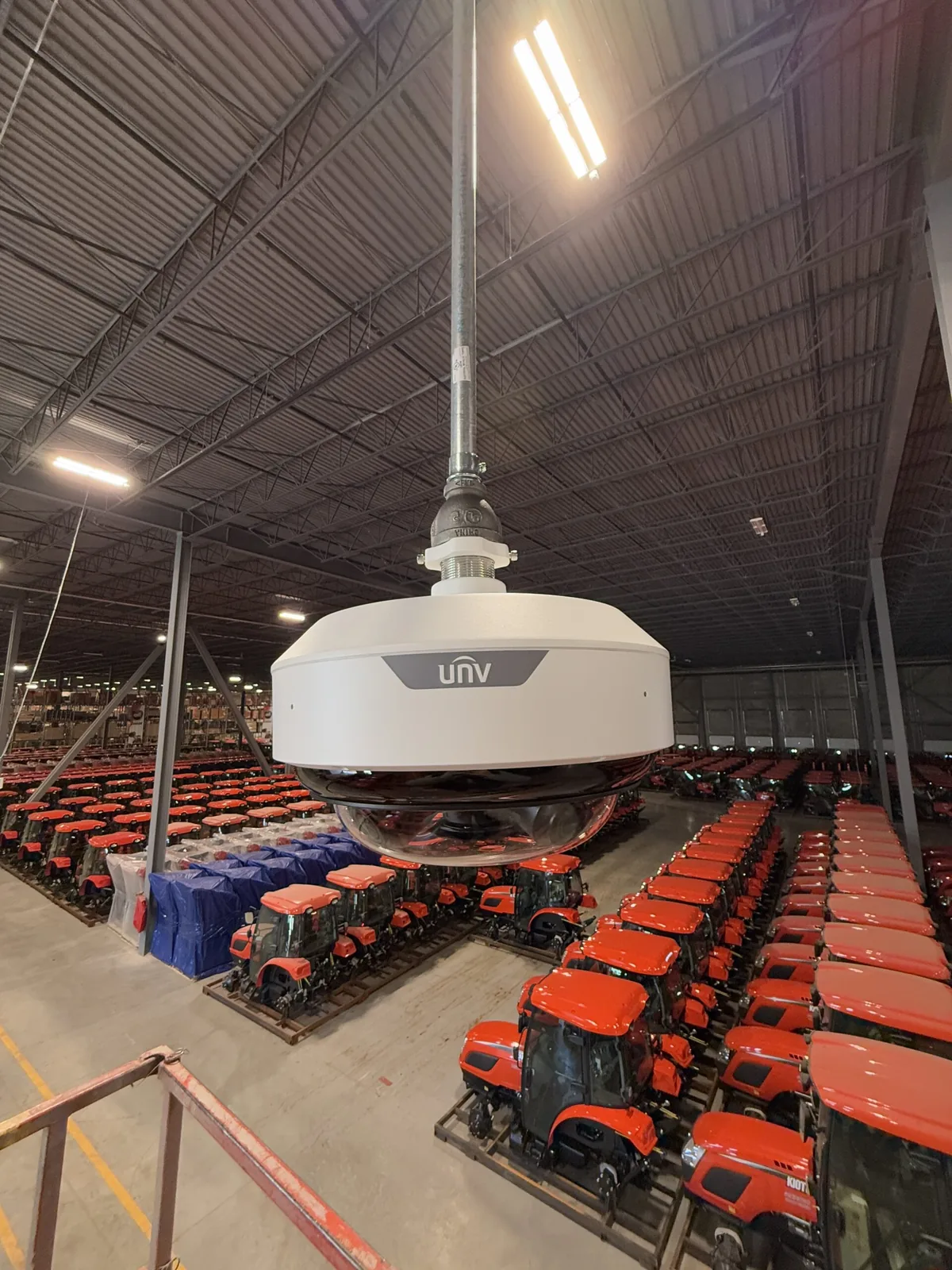
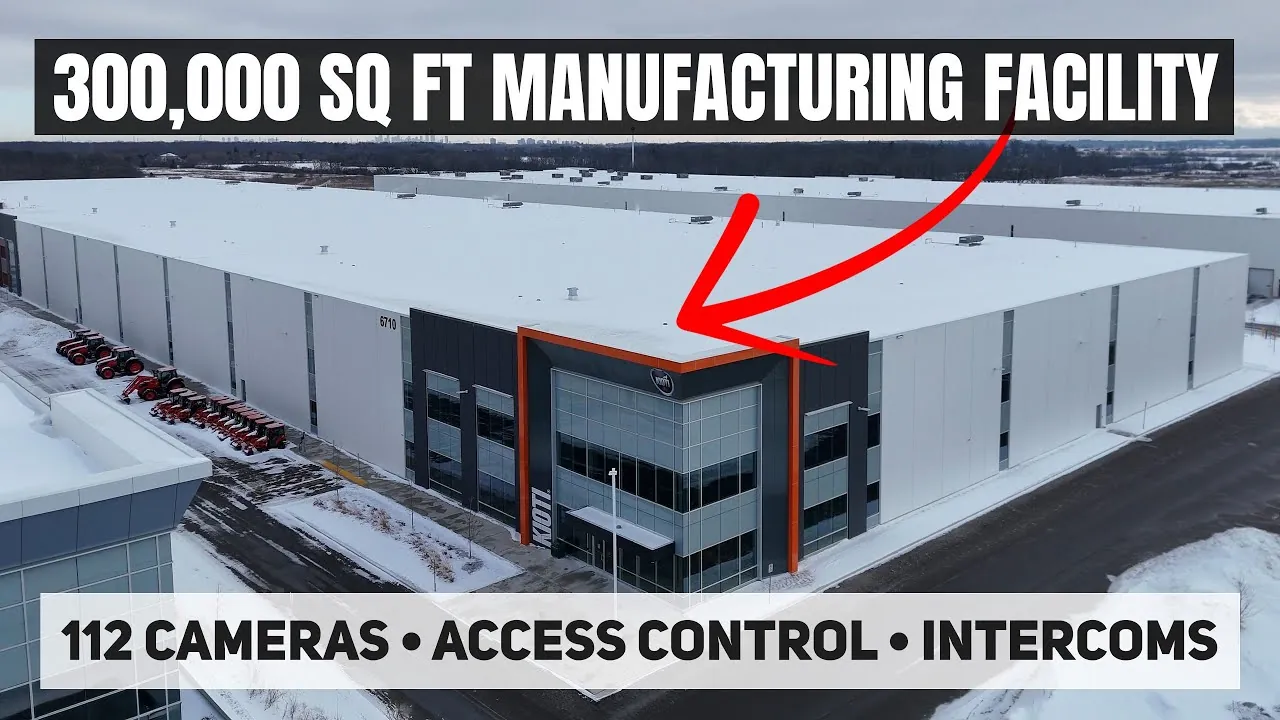
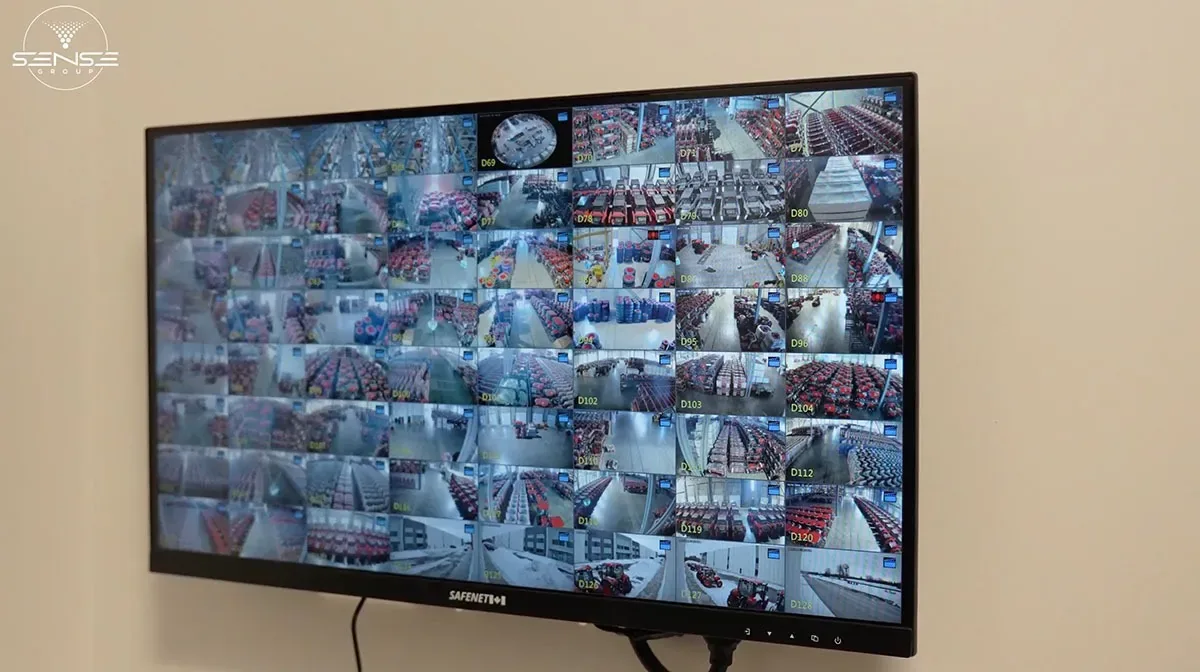
We design and install CCTV systems for warehouses, cross-docks and distribution centres: dock doors, racking aisles, staging, yard gates and employee entrances, with recorders sized for months of footage. Our largest project is a 270,000 square foot Milton warehouse with 200 Uniview cameras and 11 kilometres of cable.
Greater Toronto Area, Hamilton, Kitchener, Barrie and Muskoka. Same-week site visits.




Coverage of our Ontario service expansion, November 2025.
When a pallet, a trailer or a claim goes missing, the footage has to answer it in minutes: a readable plate at the gate, a clear view into every dock door, and no dead zones behind racking. We plan warehouse CCTV around those outcomes, install from lifts zone by zone so shipping never stops, and hand over a camera map with 90 days of retention.
Short clips from real jobs on sites like yours: what a clean installation looks like, how we handle a big project, and why we do not compromise on camera quality.
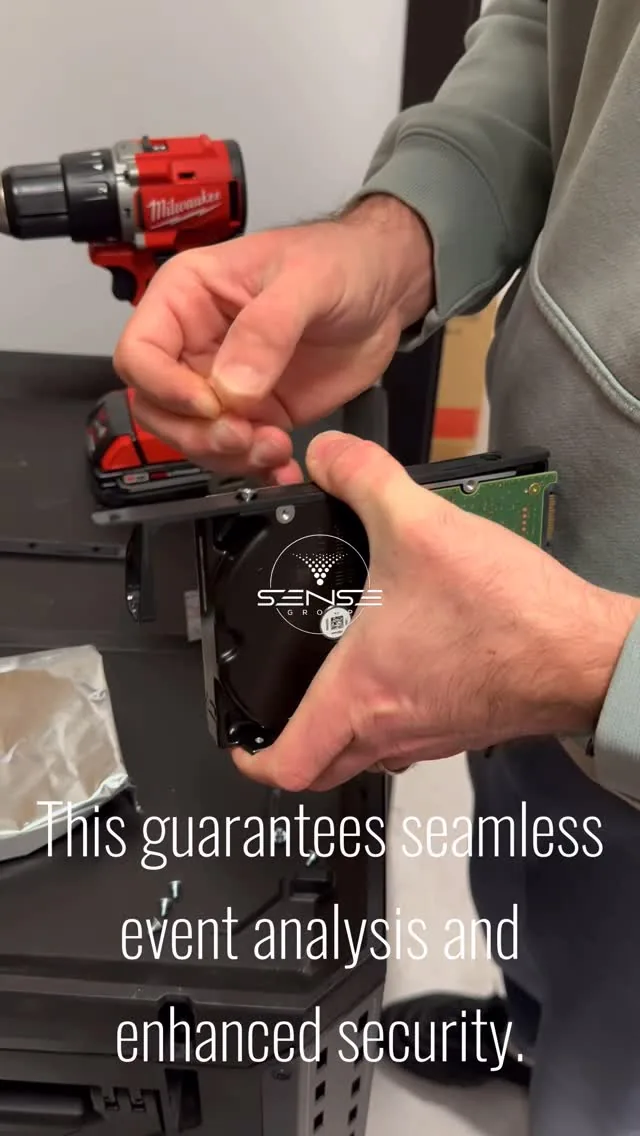
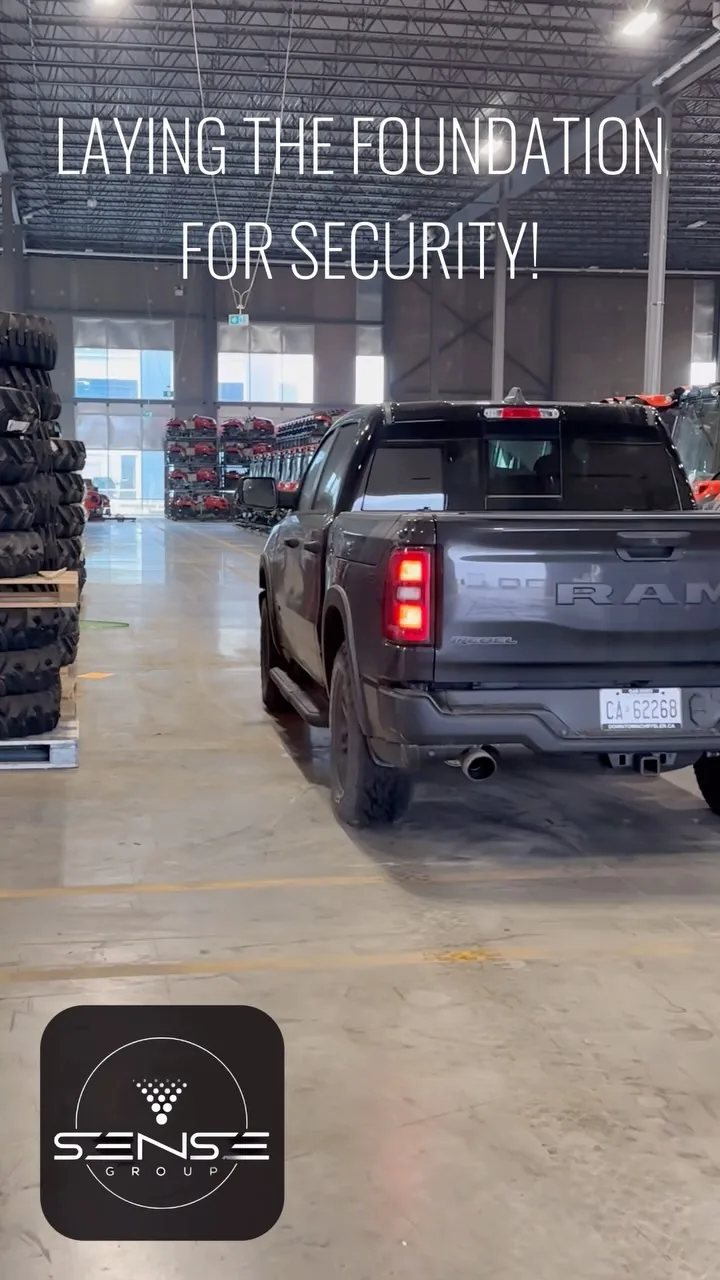
Videos play from YouTube's privacy-enhanced player only when you press play. See all our videos on YouTube.
We start every design with the incidents you actually deal with, then put a camera where each one happens. These are the five we plan for on every warehouse job.
Product disappears in staging and at the dock, not in the racking. Continuous recording of pick, pack and ship zones with face-height coverage at employee doors ends the guesswork.
Yards along the 401 and 407 are targeted at night and on long weekends. Plate capture at the gate, PTZ auto-tracking across the yard and after-hours person and vehicle alerts catch it early.
A forklift strike or a slip is worth the claim only if there is no footage. Dock and aisle cameras with 90-day retention settle disputes before they become lawsuits.
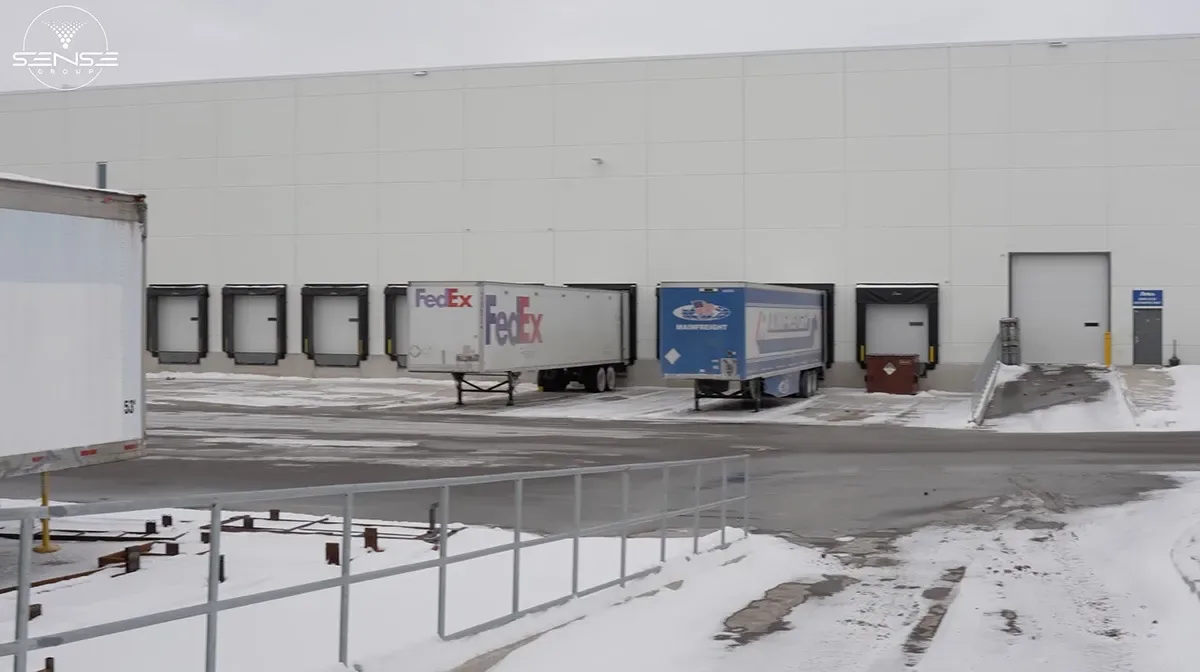
Was the trailer sealed, loaded short or damaged on arrival? One camera per dock door, angled to see the trailer interior, answers it.
Roof hatches, man doors and fence lines are the weak points. Thermal or long-range bullet cameras with smart detection cover them in the dark.
A security camera installation plan for warehouses and distribution centres is a list of positions, not a camera count. This is the coverage plan we start from on the site visit and adapt to your building.
Mounting heights are our field standard: around 3 metres for faces, 4 to 5 for overviews, 6 and up for yards with a narrow lens or a PTZ. Lens choice is set per position during the site visit.
These are the camera types we specify most often for warehouses and distribution centres, and the positions they earn on a warehouse plan. We install them from Uniview, Axis, Hikvision, Dahua, Ubiquiti and Verkada depending on the budget and the software you want to live in.
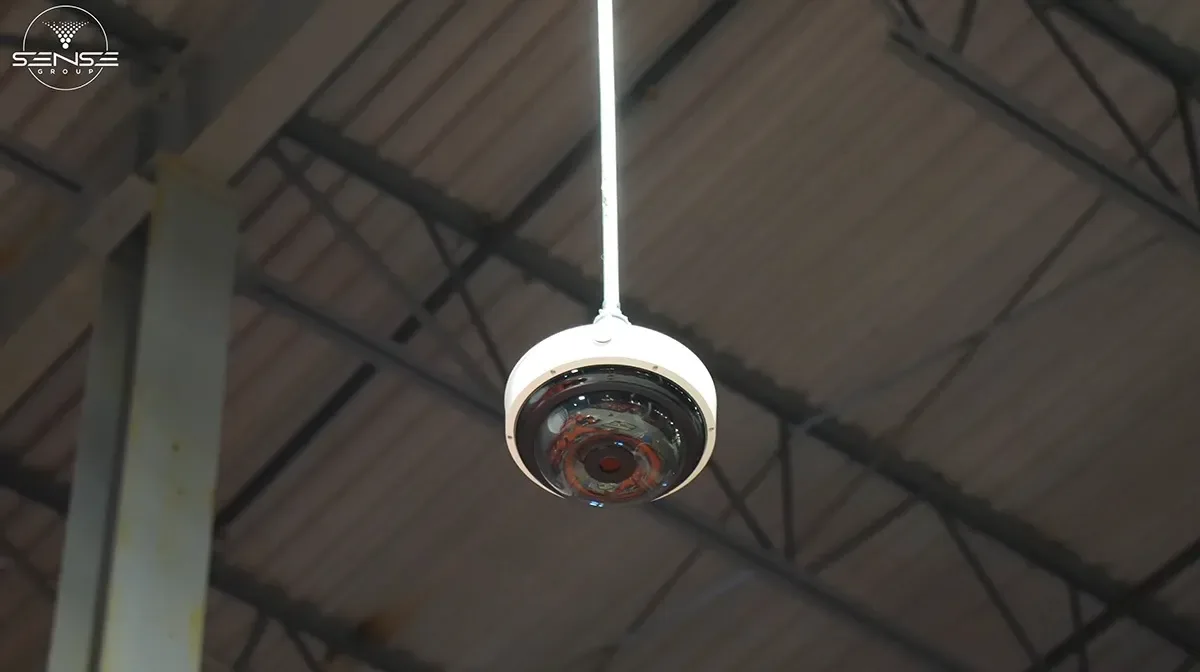
One ceiling camera that sees a whole open floor with no blind spot. We use them in packing areas, showrooms and restaurants where wall space is scarce.
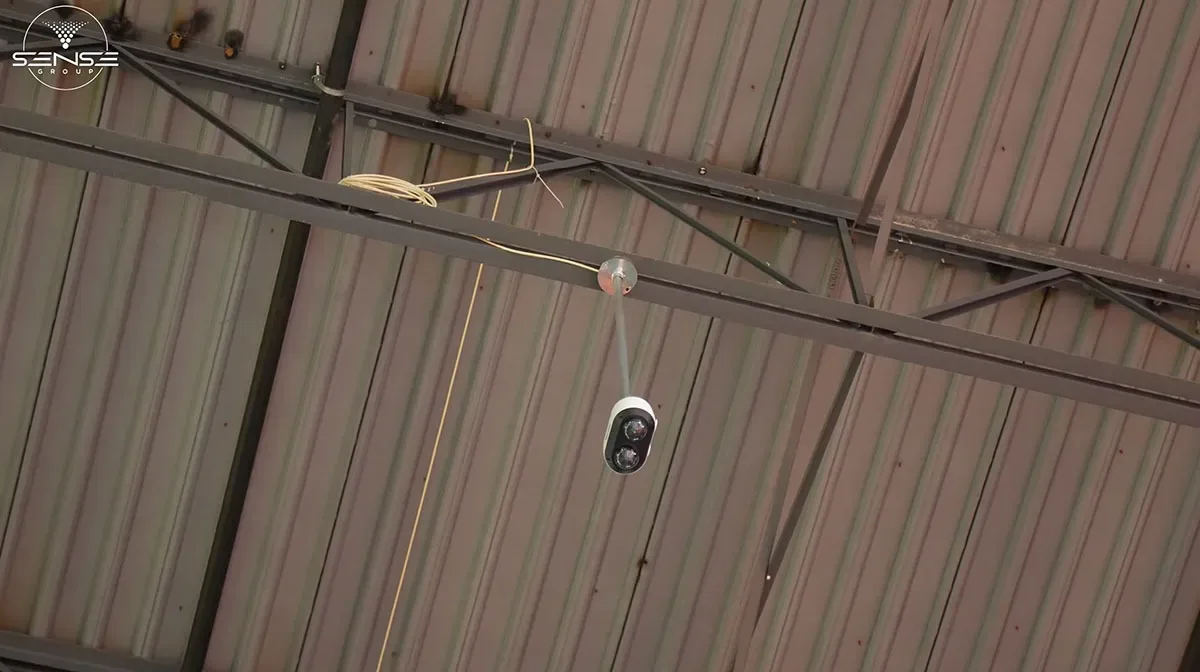
Two to four lenses in one housing that cover 180 or 270 degrees in full resolution. We installed the first multi-lens Uniview camera in Canada and use them on building corners.
Long-range cameras for fence lines, laneways, gates and large parking lots. Varifocal lenses let us read a plate or a face from 30 metres and beyond.
Pan, tilt and zoom cameras that follow movement across a warehouse floor or a truck yard. One PTZ with auto-tracking can replace several fixed cameras on a large site.
Purpose-built cameras that capture plates at entrances, gates and drive-throughs day and night, with the plate number searchable in the recorder.
Cameras that see heat instead of light for perimeter detection in total darkness, fog or snow, and for early fire detection in recycling and storage yards.
Our default outdoor camera for storefronts, loading docks and yards. The ball-in-socket design aims easily, the IR sits away from the lens so there is no glare, and the housing shrugs off snow.
Beyond the four above and the standard 4K, colour night vision and remote viewing, these are the things a warehouse system needs that a generic installation leaves out.
Alerts after hours only when a person or vehicle appears, not when a forklift light flickers or a bird crosses the yard.
Door events, intercom calls and gate openings pull up the matching video so investigations take minutes.
Cameras run on their own network segment with switches sized for the load and UPS backup for the recorder.
IP67 and IK10 housings, heaters for freezer doors and placements out of reach of forklifts and cranes.
Standard on every installation
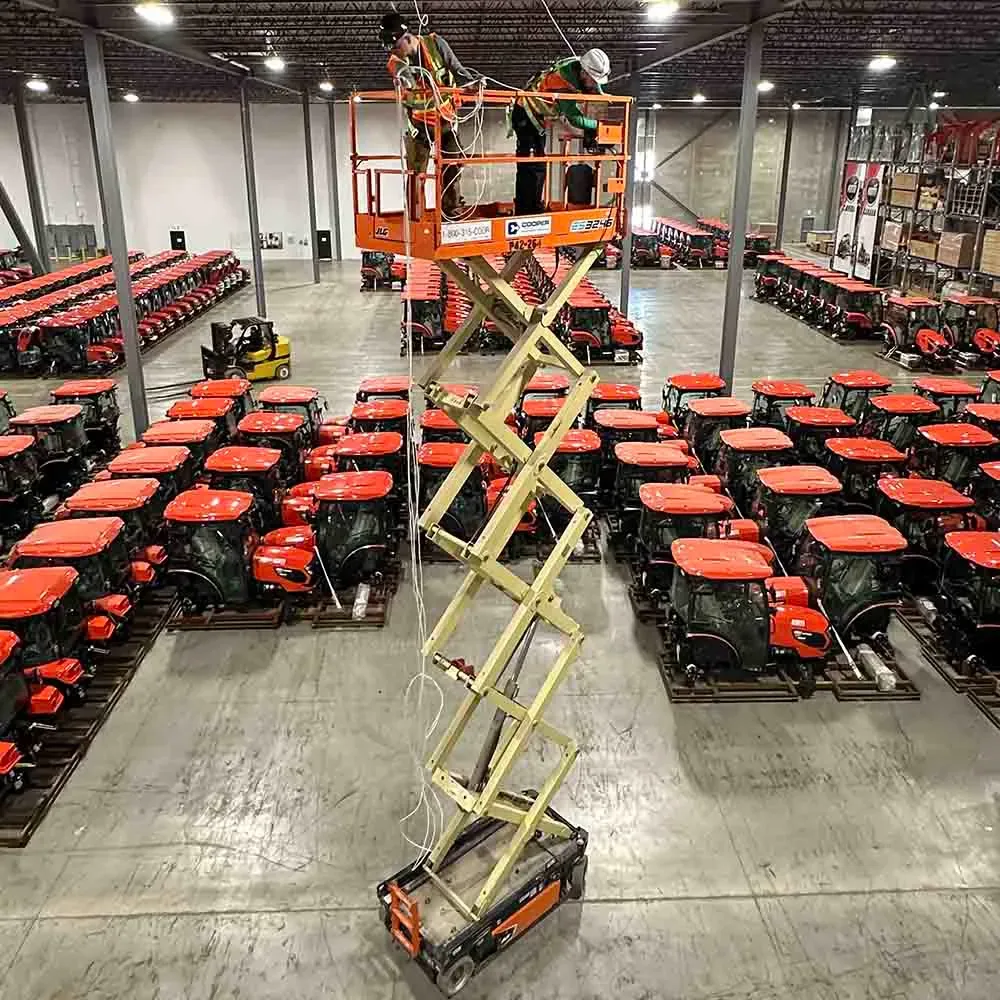
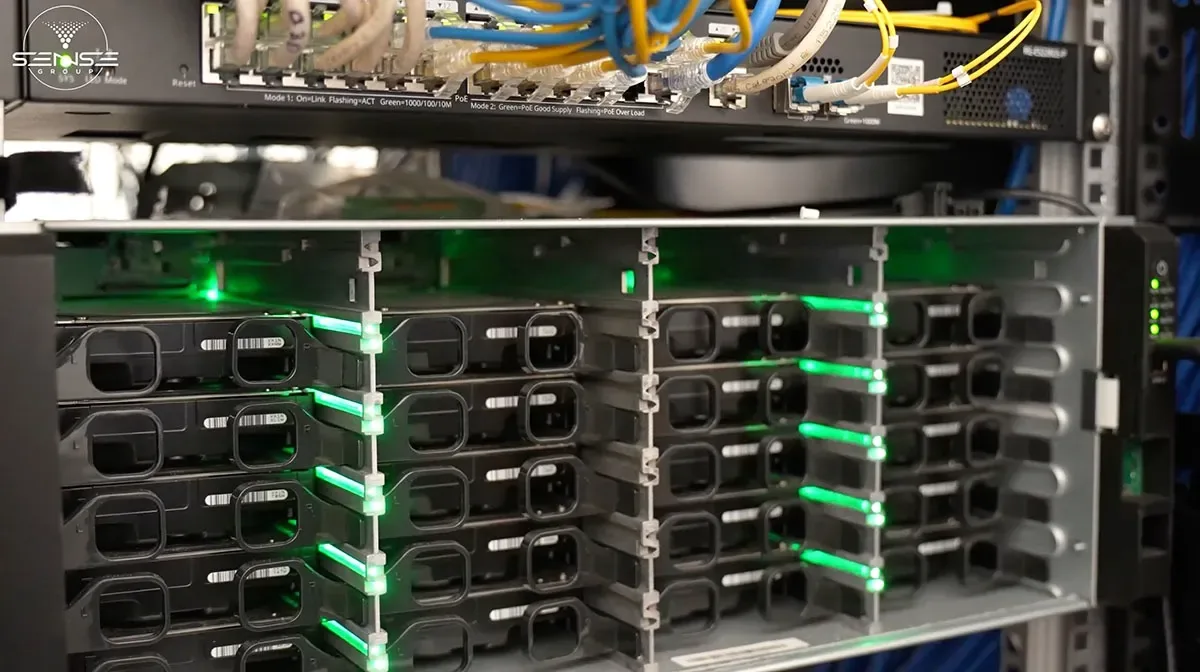
Real photos from our own jobs, not stock images. The technicians in these photos are the ones who will come to your warehouse.
 Industrial
 Industrial
 Industrial
 Industrial
 Industrial
 Industrial
We walk the floor and the yard with you, mark dock numbers, gates, doors and the places shrink actually happens, and agree on what each camera must show.
You receive a floor plan with every camera position, type, lens and mounting height, the switch locations and the recorder spec, plus a fixed price.
We install zone by zone, from scissor and boom lifts, around your shifts. Each zone is live before the next one starts, so there is no day without coverage.
Every view is checked by day and by night, analytics are tuned to the floor, managers get their logins and you get a labelled camera map and retention report.
Installed ranges in Canadian dollars for the system sizes we see most in warehouses and distribution centres. Camera count, cable distances, mounting heights and retention move the number. The written quote after the free site visit is fixed.
| System | Typical installed price |
|---|---|
| Small warehouse unit, 8 to 12 cameras | $4,500 to $8,000 |
| Mid-size warehouse, 16 to 32 cameras with gate plate capture | $9,000 to $20,000 |
| Distribution centre, 48 to 100 cameras, phased | $28,000 to $70,000 |
| Large facility, 100 cameras and up with server storage | Quoted per project |
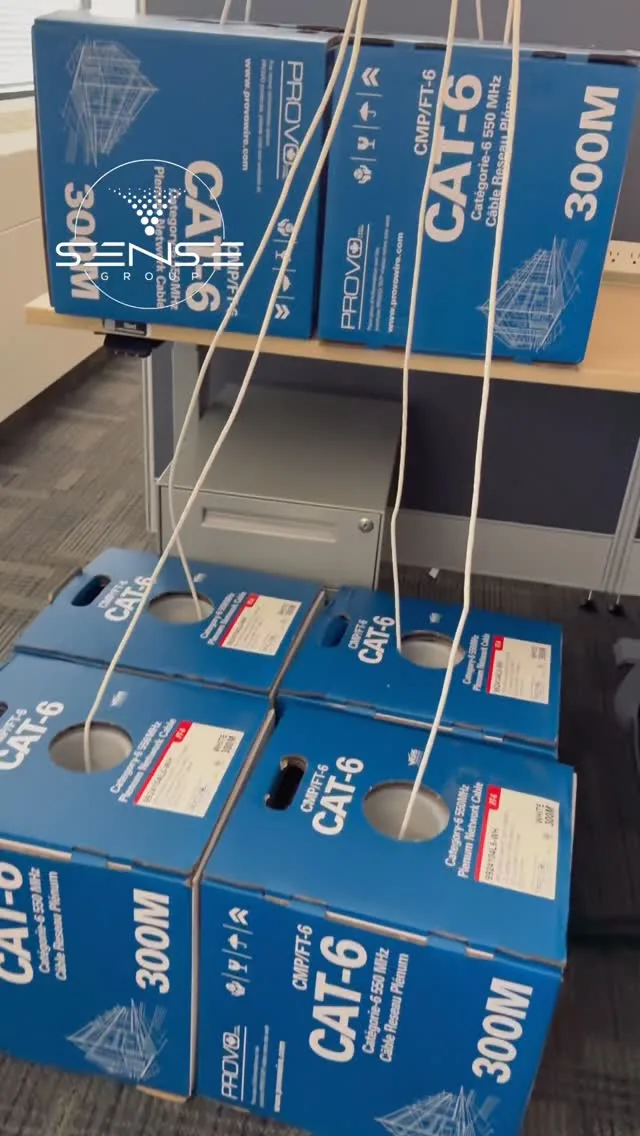
270,000 square feet, 11 kilometres of cable, a 200 TB recorder, integrated access control and intercoms, installed in phases while the facility kept shipping. The client recorded a video review a year and a half later.
Straight answers on camera count, equipment, retention and cost. If yours is not here, call us and ask.
A 20,000 square foot unit with two dock doors usually needs 8 to 12 cameras. A 100,000 square foot distribution centre with a yard typically needs 30 to 50, and large facilities run into the hundreds. The count comes from the zones, not the square footage: one camera per dock door or pair, one fisheye per staging area, one per aisle or cross-aisle, face-height cameras at every door and plate capture at every gate.
Fisheye and multi-sensor cameras for open floors, 4K bullets for aisles and fence lines, WDR turrets at dock doors, a dedicated licence plate camera at each gate and PTZ with auto-tracking for large yards. We mostly install Uniview and Axis in warehouses because their housings, optics and analytics hold up at height and in dust.
We recommend at least 60 days and size most warehouse systems for 90. Carrier claims, shortage disputes and insurance investigations often surface weeks after the event, and with smart detection and larger drives 90 days is affordable.
Yes. We phase the work by zone, use lifts in aisles you release to us, schedule high mounts between shifts or at night, and bring each zone live before moving on.
Yes. We integrate with UniFi Access, ICT Protege, SALTO and Verkada, and link gate, door and intercom events to the matching video. For WMS or yard management systems we can map camera views to dock numbers so a dispute is a two-click search.
Mid-size warehouses with 16 to 32 cameras and gate plate capture usually land between $9,000 and $20,000 installed. Distribution centres with 48 to 100 cameras run $28,000 to $70,000 and are phased. The free site visit gives you a fixed written quote.
We install camera systems for warehouses and distribution centres across the Greater Toronto Area, Hamilton, Kitchener, Guelph, Barrie and Muskoka from our base in King City. Each city page covers local pricing, neighbourhoods and recent work.
The same crews, the same equipment, a different plan for each kind of building.
Tell us about the property and we will book a site visit, draw the camera layout and send a fixed written quote.