

Doorbell camera placement determines how much your camera actually sees. Poor front door camera placement can leave blind spots, miss visitor faces, or fail to capture package deliveries. The right placement, however, allows the camera to monitor approaching visitors, detect motion earlier, and cover the entire entry area.
And, when someone attempts to install a smart video doorbell camera they do it wrong mostly. That is why many homeowners never stop to ask where to install video doorbell for the best security coverage.
Even advanced devices like the Ring doorbell, Arlo video doorbell, or Google Nest doorbell can miss important activity if the camera is positioned incorrectly.
In this guide, we’ll explain where to place security cameras outside, how to install video doorbell systems correctly to improve coverage, and what placement strategy provides the strongest protection for your front door.
So, are you ready to dig deep?
Why Video Doorbell Placement Matters for Security?
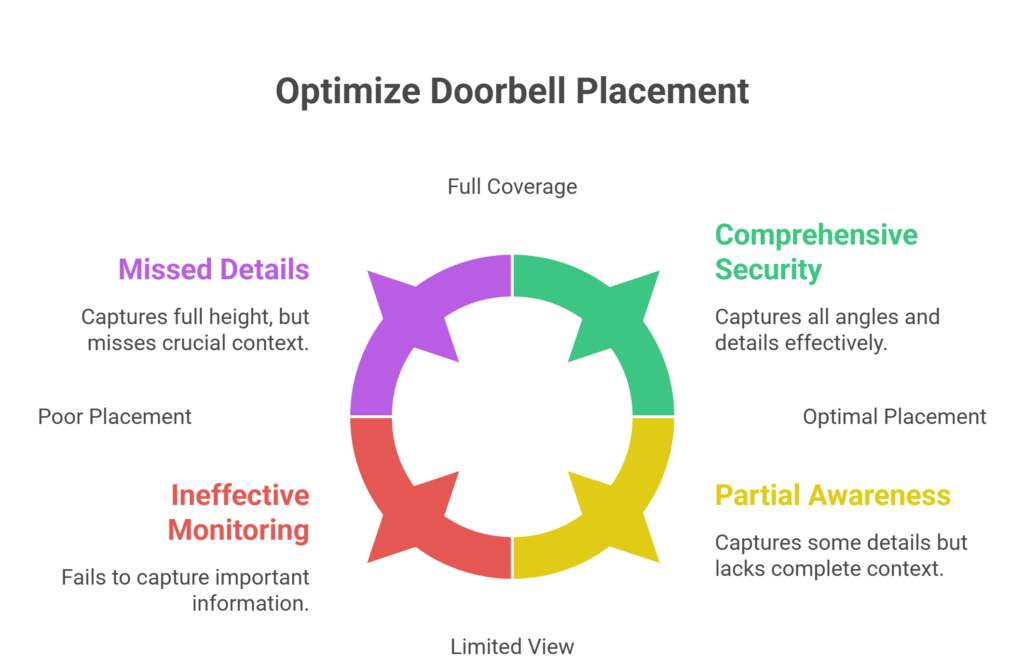
Let’s be honest. Most people install a video doorbell wherever the old doorbell already sits. Screw it in, connect the app, and hope the camera magically covers everything. Sometimes that works. Many times it doesn’t. The reason is simple. Doorbell placement decides what the camera can actually see, not the brand name printed on the box.
Think about what your doorbell camera is supposed to do. It should detect movement early, capture a clear face, and record what happens around your porch. That only happens when the camera’s field of view, motion detection, and doorbell camera range are aimed at the right space.
Here’s what really changes when the placement is done properly.
Motion detection works earlier, not too late
Most smart video doorbell cameras rely on motion sensors that detect movement across a specific detection zone. Mount the camera too high or angle it poorly, and the system might only trigger when someone is already standing at the door. That defeats half the purpose of installing it.
When the front door camera placement is positioned toward the walkway or steps, the camera detects someone approaching before they reach the door. That means you see the full interaction, not just the last two seconds.
Faces become visible instead of forehead shots
You have probably seen those doorbell clips online where the camera records the top of someone’s hat and nothing else. That usually happens because the camera sits too high or too close to the door frame.
A correct door camera view lines up with the natural height of someone walking toward the door. When that angle is right, the camera captures the face clearly. Facial detail becomes usable instead of guesswork.
Packages stay inside the frame
Delivery monitoring is one of the main reasons people install a doorbell camera. Yet many setups completely miss the spot where packages are placed. The camera sees the delivery driver walk away, but never shows the box sitting on the porch.
A slightly adjusted camera field of view fixes this. By angling the camera to include the lower porch area, the lens captures both the person and the package drop zone.
The camera range gets used where it matters
Every doorbell camera has a limited doorbell camera range. If the lens points toward empty space or the street, much of that range is wasted. Good front door camera placement focuses the camera on the path visitors actually take.
That means the camera records movement on the walkway, steps, or porch instead of random motion twenty feet away.
Blind spots disappear
Front entrances are rarely simple flat walls. Porch columns, railings, decorative lights, and door trim can easily block part of the lens. Even a small obstacle can create a hidden corner where movement goes unnoticed.
Careful doorbell placement avoids those obstacles and keeps the camera field of view clear across the entrance area. That small adjustment often makes the difference between a useful recording and a missed event.
Strong security setup
A doorbell camera should not work alone. When positioned correctly, it acts as the first layer of your home’s video surveillance system. It records who approaches the door, captures activity around deliveries, and alerts you before someone even reaches the entrance.
Once you start asking yourself where to install video doorbell this way, the camera stops being just a gadget on the wall. It becomes a proper security tool that watches the exact space you care about.
And now that you understand why placement changes everything, the next question naturally follows. Where exactly should the camera go, and how high should it be mounted for the best coverage? Let’s look at the standard doorbell height and the mounting position professionals actually recommend.
What Is the Standard Doorbell Height for a Video Doorbell?
When homeowners start thinking about where to install video doorbell cameras for better security, the first thing professionals examine is height. Many people focus on the device brand or the mobile app features, yet the doorbell height often determines whether the camera captures useful footage or completely misses important activity.
Across most residential properties, installers follow a simple guideline called the standard doorbell height. The camera should usually sit between 48 and 52 inches above ground level.
When mounted at the proper doorbell height standard, visitors enter that detection zone earlier, which allows the system to trigger motion detection alerts sooner.
Below, we are showing the recommended doorbell height adjustments based on common entrance layouts.
| Entrance Layout | Recommended Doorbell Height | Why It Works |
| Standard flat entry | 48–52 inches | Aligns the lens with visitor’s face height |
| Entry with steps | 44–48 inches | Adjusts for the elevated approach path |
| Raised porch or deck | 42–46 inches | Maintains a balanced camera viewing angle |
| Narrow townhouse entry | 46–50 inches | Keeps the walkway inside the camera field |
Many Toronto homeowners installing smart doorbells encounter these small layout variations, especially in townhouses or older Ontario properties. When height is adjusted correctly, the camera uses its full detection range instead of wasting coverage on walls or empty space.
This is also why installers consider doorbell cameras as part of a broader video surveillance setup rather than a standalone gadget. Once the correct height is established, the next step becomes deciding the exact mounting position around the entrance so the camera captures the walkway, porch area, and delivery zone effectively.
Where to Install Video Doorbell Around the Front Door for Maximum Security
Front door security starts long before someone presses the doorbell. The moment a visitor steps onto the walkway or porch, your camera should already be watching. That is why where to install video doorbell cameras around the entrance matters far more than many homeowners realize.
A poorly positioned device may record the final second at the door but miss everything that happened beforehand. The approach path, the delivery interaction, and the moment someone scans the porch for packages can all happen outside the frame.
This matters even more today as theft continues to increase across Canada. Retailers across the country lost $9.1 billion to theft in 2024, with Ontario experiencing the largest share of those losses. Security professionals increasingly emphasize entrance monitoring because the doorway is often the first point where suspicious activity appears.
Beside the Door Frame
Mounting the camera beside the door frame remains the most familiar installation method. In many homes, the existing wiring already sits there, so placing the device in that location feels convenient.
This position works well because the camera faces the exact spot where visitors stop to ring the bell.
The moment someone reaches the door, their face sits directly inside the door camera view, making identification much easier.
This location also offers several practical advantages.
- Visitors remain centered inside the frame when standing at the door.
- Motion alerts activate as someone steps into the entrance area.
- The interaction with the doorbell button stays clearly visible.
- Existing doorbell wiring usually connects without complicated drilling.
However, deep trim or decorative door frames can block part of the view. When the frame sits several inches forward from the wall, installers sometimes shift the camera slightly outward to improve front door camera placement and widen the viewing angle.
On the Exterior Wall
Some entrances make door-frame mounting difficult. Narrow trim, brick edges, or decorative columns may block part of the camera’s view. In these situations, the exterior wall often becomes the better option.
Mounting the camera on the wall gives the lens more space to capture the entrance area. This is especially helpful when using devices designed with wide lenses, including models that behave almost like a camera 180-degree outdoor system.
Placing the camera on the wall can improve coverage in several ways:
- The camera captures a wider door camera view across the porch.
- Steps, railings, and package areas stay within the frame.
- The door frame no longer blocks part of the lens.
- Wider entrances become easier to monitor.
Homes with brick or stone exteriors often benefit from this position because the flat wall allows the camera to look outward without obstruction.
Facing the Walkway or Porch
Many installations focus only on the door itself. A smarter approach considers how people actually reach the door. Visitors rarely appear instantly at the entrance. They walk along a path, climb steps, or cross a porch before they reach the bell.
Positioning the camera so it captures part of that approach path dramatically improves security coverage.
Security specialists often recommend this strategy when discussing where to place outdoor security cameras around residential entrances.
This placement provides several benefits, such as:
- The camera detects visitors earlier along the walkway.
- Motion alerts trigger before someone reaches the door.
- Suspicious activity near the porch becomes visible sooner.
- Delivery interactions remain fully recorded.
This strategy reflects the best placement of security camera principles used in professional residential security design. Instead of recording only the final moment at the door, the camera documents the entire approach sequence.
You see how someone arrives, where they pause, and what they do around the entrance.
When those zones stay inside the frame, the camera begins to function as a real security tool rather than just a notification device.
However, we are not done yet, guiding you on where to install video doorbell properly. Let’s move into a more important consideration.
Video Doorbell Placement Strategy for Offices and Commercial Buildings
When you walk into most commercial buildings, you quickly notice something interesting. Not every door is used the same way. Some doors welcome clients all day. Others are used only by employees. A few exist mainly for deliveries or service access. Because of that, installing a video doorbell for a business is rarely about a single front entrance.
For offices, retail stores, and mixed-use commercial properties, the smarter approach is to think about access points rather than doors. Every place where someone might request entry, drop off a package, or approach the building after hours becomes a potential monitoring point.
Many security professionals now treat doorway monitoring as the first line of video surveillance, especially in busy commercial districts.
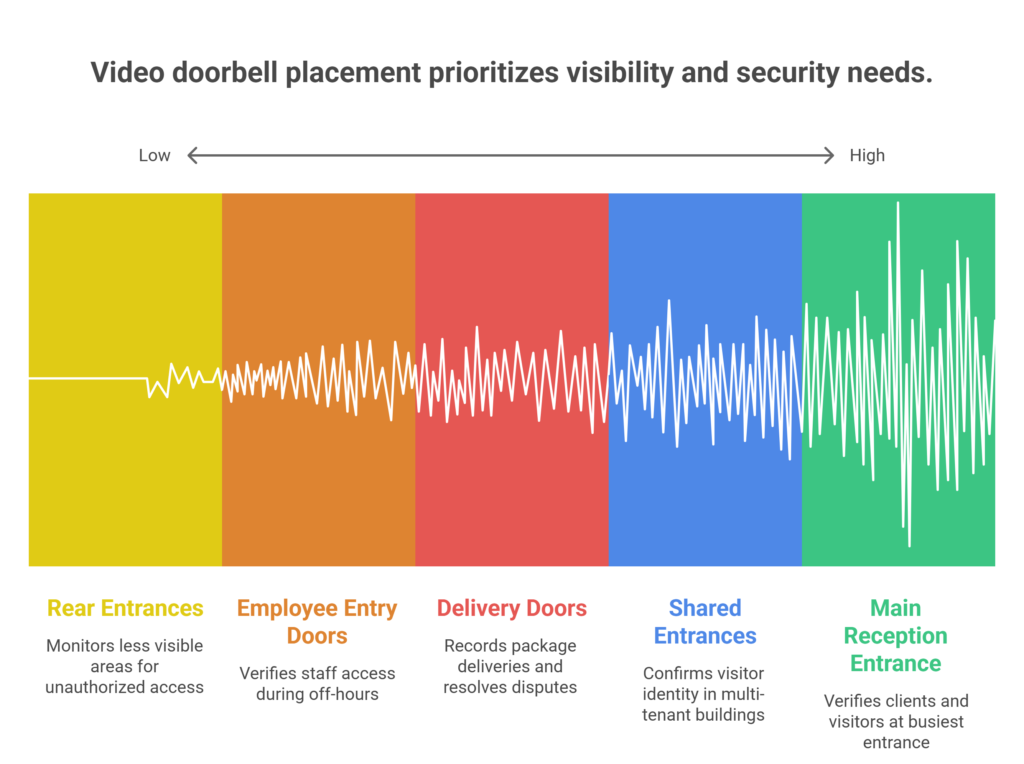
With that in mind, these are the locations where video doorbells provide the most value for offices and commercial properties.
Main Reception Entrance
The reception door is usually the busiest entrance in a commercial building. Clients arrive for meetings, delivery drivers bring packages, and service technicians occasionally request access. A video doorbell at this location helps staff see exactly who is waiting outside before the door is opened.
This placement works well because it allows reception teams to verify visitors without leaving their desk. It also creates a clear visual record of who approached the building and when they arrived. For businesses that handle sensitive information or client meetings, that extra layer of visibility often becomes surprisingly useful.
Employee Entry Doors
Many commercial properties have at least one entrance used primarily by staff. These doors may sit on the side or rear of the building and usually receive far less attention than the main reception door. However, they are often used earlier in the morning, later in the evening, and sometimes outside regular operating hours.
Adding a video doorbell at employee entrances helps managers understand who is arriving or requesting access at those times. When combined with electronic entry systems, it also provides a visual confirmation of the person entering the building.
Delivery and Service Doors
Every business that receives inventory, equipment, or courier shipments eventually develops a routine around deliveries. Drivers arrive, packages are handed off, and staff sign for shipments. Yet these interactions often happen at doors that are not constantly monitored.
Installing a video doorbell at delivery entrances allows staff to see who is waiting outside before opening restricted areas. It also provides a useful record of deliveries, which can help resolve disputes about missing shipments or damaged goods.
Rear and Secondary Entrances
Rear doors often become invisible in security planning. They sit behind the building, near parking areas or service lanes, and they may not receive much attention during the day. Unfortunately, these entrances are also common targets for unauthorized access attempts.
Placing a video doorbell near these doors adds a simple but effective layer of monitoring. Anyone approaching the door becomes visible immediately, and the interaction is recorded even when no one is nearby to observe it.
Shared Entrances in Multi-Tenant Buildings
Commercial buildings that house multiple businesses often rely on controlled entry systems. Visitors must request access before someone inside unlocks the door remotely. A video doorbell installed at this shared entrance allows tenants to confirm exactly who is requesting entry.
For property managers and office tenants, this simple addition makes access control far more transparent. Instead of guessing who might be outside, they can see the visitor clearly before granting access.
What matters most across all these environments is not the device itself but the thinking behind the installation. A well-placed video doorbell helps staff understand who is approaching the building, why they are there, and when they arrive. That information becomes especially valuable in busy commercial areas where several entrances may operate throughout the day.
Video Doorbell Placement for Different Home Layouts
Home entrances are not all built the same way. Some houses have wide driveways and large porches. Others have narrow walkways or shared entry spaces. Because of these differences, camera placement must adapt to the structure of the property.
The entrance layout determines what the camera can actually see. A camera that works well on a detached home may perform poorly in a townhouse or condo hallway. The goal remains the same in every case. The camera should capture the approach path, the interaction at the door, and the space where deliveries are left.
Below are placement strategies that work best for different types of homes:
Placement Strategy for Detached Houses
Detached homes usually provide more space around the entrance. Walkways, driveways, and porches often lead directly to the front door. This layout allows the camera to monitor a larger portion of the property.
The best placement usually covers:
- Driveway or front walkway leading to the door
- Porch area where visitors stop, and
- The location where packages are normally delivered
This coverage allows the camera to detect movement earlier. Visitors appear in the frame before they reach the door, which provides a clearer record of the entire interaction.
Placement Strategy for Townhouses and Narrow Entrances
Townhouse entrances tend to be narrower. Front doors often sit close to sidewalks or shared pathways. Limited space makes camera positioning more sensitive.
Effective placement should monitor:
- Narrow walkway leading to the door
- An immediate entrance area where visitors stand
- Shared path where people approach the property
A slight outward angle often improves visibility in these situations. The camera captures visitors approaching the entrance without focusing too much on neighboring homes.
Placement Strategy for Apartments and Condo Hallways
Apartment and condominium units usually have indoor entry doors. Hallways replace porches and walkways as the main approach area. The camera, therefore, needs to monitor movement along the corridor.
A good setup usually captures:
- The hallway approach leading to the unit
- Visitors standing outside the door
- Delivery interactions in front of the entrance
The camera should point slightly down the hallway rather than directly at the door. This position allows the lens to capture approaching visitors while keeping the doorway interaction clearly visible.
Each entrance layout changes how the camera should be positioned. A placement that works perfectly for a detached home may not perform well in a hallway or narrow townhouse entry. The right placement always follows the same principle. The camera should watch the path people take before they reach the door.
Now you know where to install video doorbell so well. But are you sure you will be able to do it perfectly at the end?
Common Video Doorbell Placement Mistakes That Reduce Security
Even high-quality cameras can fail when placement mistakes slip into the installation. Many homeowners invest in reliable devices yet overlook small positioning details that quietly weaken coverage. A camera may still record video, but the footage becomes far less useful when the viewing angle, distance, or surroundings interfere with what the lens can actually see.
Below are some of the most common installation mistakes that reduce front door security:
Installing the Camera Too High
Mounting the camera too high is one of the most frequent issues installers encounter. Many people assume that a higher position automatically provides better visibility. In reality, placing the camera too high usually forces the lens to tilt downward sharply.
Mounting the Doorbell Too Close to the Door Frame
Another mistake appears when the doorbell camera sits extremely close to the door edge. When someone stands directly in front of the camera, the lens may struggle to capture the full face because the viewing distance is too short.
This position can also limit the camera’s ability to see movement around the porch or entry area. Instead of detecting visitors as they approach, the system records only the moment they press the doorbell.
Blocking the Camera’s Field of View
Sometimes the camera is mounted correctly, but objects around the entrance interfere with the image. Architectural features and decorative elements can partially block the camera’s field of view.
Common obstacles include:
- Porch columns or support posts
- Exterior wall decorations or lighting fixtures
- Railings or furniture near the entrance
- Seasonal decorations placed around the door
These objects can create blind spots where activity occurs just outside the camera’s recording area. Installers often review an outdoor security camera placement diagram before finalizing the position to confirm that the lens has a clear view of the entrance.
Professional Video Doorbell Installation in Ontario
It is almost impossible for a newbie or first-time installer to avoid mistakes when setting up a video doorbell. At first glance, the process looks simple. Mount the device, connect the app, and start recording.
Many people spend a lot of time adjusting the camera position again and again, trying to find the right viewing angle. Others discover the wiring does not support the new device, or the door frame blocks part of the camera’s field of view. The result usually involves wasted time, extra tools, and a system that still does not perform the way it should.
This is where professional installation becomes valuable.
Our team at Sense Group helps homeowners and businesses avoid those problems from the beginning. We evaluate the entrance layout, determine the correct mounting height, adjust the camera angle, and make sure the system integrates a CCTV video surveillance system properly with the rest of the property’s security setup.
Across Ontario, we regularly help clients with:
- Video doorbell installation for homes and commercial entrances
- Smart home integration that connects doorbells with mobile monitoring
- Security camera setup that expands coverage beyond the front door
We provide installation services throughout the Greater Toronto Area and nearby cities, including Toronto, Guelph, Kitchener, Hamilton, and Mississauga. Whether a property requires a simple upgrade or a full entrance monitoring setup, professional installation ensures the system works reliably from day one.
If you need installation in the GTA, you can learn more about our video doorbell installation Toronto services.
For a broader overview of our services, visit our access control system page.
Professional installers consider details that are easy to miss during a DIY setup. Proper placement, correct wiring, stable network connections, and secure mounting all contribute to a doorbell system that actually improves security instead of creating new problems.
Final Thoughts
A video doorbell can be a powerful security tool, but its effectiveness depends far more on installation decisions than on the device itself.
When you know where to install video doorbell for your needs, you are literally making further things much easier.
The right mounting height helps the camera capture faces clearly.
A correct viewing angle ensures the entrance, walkway, and delivery area remain inside the frame. Motion detection settings determine how early the system alerts you when someone approaches the door.
When these elements work together, the camera becomes a reliable part of your home’s security system. When they are overlooked, even advanced devices can miss important activity.
So, good luck with your video doorbell installation, and if you found this guide helpful, share it with others or drop your questions in the comments.